
Commercial Litigation Solicitors in Cardiff
In a business dispute in Cardiff? Complex commercial cases can now be heard locally at the Business and Property Courts in Wales, and you can use Welsh. We act for companies, directors, shareholders and partners across South Wales, claimant or defendant.
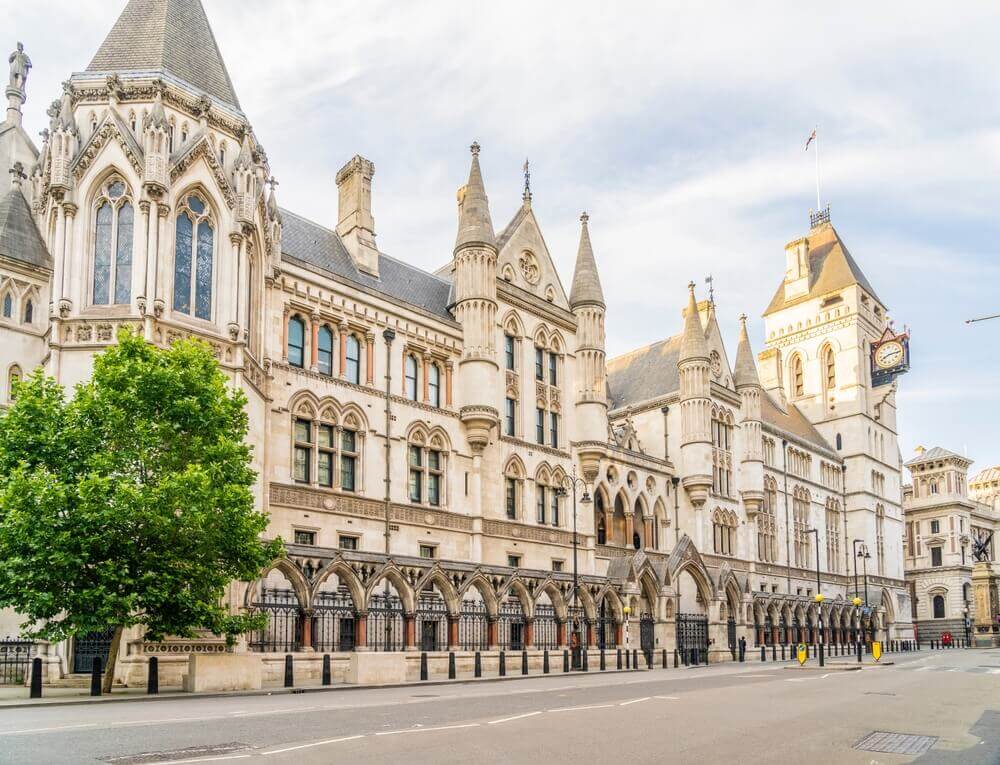
Commercial litigation from our Cardiff office
Commercial litigation is the resolution of business disputes through the courts, but going to trial is rarely the goal. We act for companies, directors, shareholders and partners across Cardiff and South Wales, claimant or defendant, with the aim of the best commercial outcome as efficiently as possible. How litigation works, the costs and the alternatives are set out on our commercial litigation page. Here we focus on what is local.
Where are business disputes heard in Cardiff?
For the Cardiff area, lower-value claims are dealt with in the County Court at Cardiff, while higher-value or complex commercial, company and insolvency claims are heard in the Business and Property Courts in Wales, which sit at the Cardiff Civil and Family Justice Centre on Park Street. That means a South Wales business with a substantial or complex claim no longer has to litigate in London, specialist commercial justice, with judges who have the relevant expertise, is available here. The court that hears a case affects the procedure, cost and timetable, and we advise on the right venue at the outset.
Can your case be heard in Welsh?
Yes. For a court sitting in Wales you have the right to use Welsh, you, your witnesses and your representatives can all use Welsh, and a bilingual hearing can be arranged, with no delay or disadvantage to your case.
How our Cardiff team helps
We handle the full range of business disputes for clients across Cardiff and South Wales, shareholder and partnership fall-outs, boardroom disputes, contract claims, professional negligence, and debt recovery in Cardiff. The courts now expect parties to try to settle, and can order mediation, with an unreasonable refusal able to cost you even if you win, so we often press for a negotiated outcome while protecting your position in proceedings. We charge by the hour and give you a written estimate; in larger cases the court caps recoverable costs through budgets, and the general rule is that the loser pays. The Business and Property Courts handle the more substantial work, and the Civil Mediation Council can help you find a mediator.
Robertsons Solicitors in Cardiff
Find us: 6 Park Place, Cardiff CF10 3RS
Call Cardiff: 029 2023 7777
Tell us your access needs and we’ll do what we can to accommodate you.
Full Cardiff office details & directions →Litigation is a means, not an end, we pursue the outcome that makes commercial sense in the Cardiff courts, and tell you the costs and odds honestly.
Our approachClear advice. Practical next steps.
Every commercial litigation matter is different. We start by understanding your situation before we recommend an approach.
We won't push you toward a process that doesn't fit. We won't drag things out. And we'll always tell you what something will cost before we start it.
- A dedicated specialist for your matter, backed by the wider Robertsons business disputes team
- Transparent pricing: clear written costs before any work begins
- Plain-English advice: no jargon, no surprises
- Offices across South Wales and the South West
Real stories from real clients
“Excellent service. Friendly, professional and efficient.”Fiona Guthrie Bristol
“Efficient, prompt and easy to deal with.”David Fawcitt
“Very professional and quick to reply to any queries, thank you.”Christopher Chambers
Who would be looking after you?
Some of your commercial litigation team at Robertsons.
Liz O'Connor
Liz is an Associate Director in the Litigation & Dispute Resolution team at Robertsons Solicitors and heads the firm's Employment department. Qualified in 2008, she has over 15 years' experience advising individuals and businesses on employment matters, partnership and shareholder disputes, and a wide range of contentious work, with a practical, commercially minded approach.
View profileLuke Hallinan
Luke is a Director at Robertsons Solicitors and head of the Civil Litigation department. Qualified in 1989, he has over 30 years' experience in contentious litigation for both individuals and businesses, with particular strengths in neighbour and boundary disputes and contentious probate, alongside commercial litigation, property disputes and professional negligence. He founded the firm's debt recovery department.
View profileOlivia James
Olivia is a Litigation & Employment Legal Executive. She supports the team's solicitors across a range of contentious matters, preparing legal documents, managing case files and ensuring client matters progress smoothly and efficiently.
View profileRobyn Bramham-Exley
Robyn is a Litigation and Employment Legal Executive. She supports the firm's Litigation and Employment team across commercial, property, employment and contentious probate matters, assisting with proceedings, witness statements, disclosure and court preparation. She holds the CILEx Level 3 Diploma and CPQ Advanced Paralegal Qualification.
View profileQuestions clients ask us about commercial litigation
In commercial litigation, the general rule is that the unsuccessful party pays the successful party's costs, so a business that wins can usually recover a proportion of its legal costs from the loser. However, recovery is rarely complete: the court assesses the costs, and the amount recovered is typically in the region of 60 to 70 percent of the actual costs incurred, even on a successful claim. In multi-track cases, costs budgeting caps the recoverable costs at the level approved by the court. Some costs may be irrecoverable, and if the case is lost, the business will usually have to pay the other side's costs as well as its own. The costs rules, including the impact of Part 36 offers, make the financial outcome of litigation uncertain, which is why an early and realistic assessment of costs against likely recovery is essential before committing to proceedings.
Obtaining judgment does not guarantee payment, if the losing party does not pay, the successful business must take enforcement action. The main methods of enforcing a money judgment are: taking control of goods, where enforcement agents seize and sell the debtor's assets; a third-party debt order, freezing money owed to the debtor by a third party such as its bank; a charging order, securing the judgment debt against the debtor's property or other assets; and, where the debtor is a company, insolvency proceedings such as a winding-up petition. The most effective method depends on the debtor's assets and financial position. Before pursuing litigation, it is sensible to assess whether the defendant will be able to pay any judgment, a judgment against a company with no assets may be worthless. Enforcement against assets or parties outside the jurisdiction raises additional complexity. Taking advice on enforcement prospects at the outset, not just after judgment, is good practice.
Many commercial disputes can be prevented or made easier to resolve through good practice. Key measures include: using clear, well-drafted written contracts that set out the parties' obligations, payment terms, and what happens if things go wrong; including dispute resolution clauses specifying how disputes will be handled and which law and jurisdiction apply; carrying out due diligence on the parties you do business with; keeping good records of agreements, communications, and performance; addressing problems early, before they escalate into disputes; and taking legal advice when entering significant contracts or when a problem first arises. Including provisions for mediation or arbitration in contracts can provide a faster, cheaper route to resolution if a dispute does occur. Investing in sound contracts and good practice at the outset is far cheaper than litigation later. A business that documents its dealings well and seeks advice early is in a much stronger position if a dispute arises.
The duration and cost of commercial litigation depend heavily on the complexity and value of the dispute and how vigorously it is contested. A straightforward claim may resolve in months, particularly if it settles after the pre-action stage. A contested claim that proceeds to trial typically takes one to two years in the County Court, and longer in the High Court or Business and Property Courts for complex multi-party disputes. As for cost, we charge by the hour and provide a written cost estimate at the outset, updated as the matter progresses. In larger cases allocated to the multi-track, costs budgeting applies, the parties file and exchange costs budgets which the court reviews and which cap the recoverable costs. The cost of litigation should always be weighed against the amount at stake and the prospects of success and recovery. A frank assessment at the outset, and at each key stage, allows a business to make commercially sensible decisions.
Interim remedies are court orders made before the final resolution of a dispute, to preserve the position or prevent harm pending trial. The main interim remedies in commercial litigation include: freezing injunctions, which prevent a party from disposing of or dealing with its assets where there is a risk of dissipation; search orders, which permit the search of premises and seizure of evidence where there is a risk it will be destroyed; interim injunctions, which require a party to do or refrain from doing something pending trial; interim payments, where a defendant is ordered to make a payment on account of damages before trial; and orders for the preservation or detention of property. These remedies are powerful and are granted by the court in appropriate circumstances, often urgently and sometimes without notice to the other party. They can be decisive in protecting a business's position. Obtaining or responding to an interim remedy requires urgent specialist advice.
A Part 36 offer is a formal settlement offer made under Part 36 of the Civil Procedure Rules, with specific and powerful costs consequences designed to encourage settlement. If a claimant rejects a defendant's Part 36 offer and then fails to beat it at trial, the claimant is usually ordered to pay the defendant's costs from the date the offer expired, even though the claimant won the case. Conversely, if a defendant fails to beat a claimant's Part 36 offer, the claimant is awarded enhanced interest, costs on the more generous indemnity basis, and an additional uplift. These consequences make Part 36 offers a key tactical tool in commercial litigation. Receiving a Part 36 offer requires careful and prompt consideration, there is a 21-day period to accept without adverse costs consequences. Whether to make or accept a Part 36 offer is a strategic decision that should be taken with legal advice, weighing the offer against the realistic value of the claim and the costs risk.
Alternative dispute resolution (ADR) covers methods of resolving disputes without a full trial, principally mediation, but also arbitration, expert determination, and early neutral evaluation. Mediation, in which an independent mediator helps the parties negotiate a settlement, has a high success rate and is significantly faster and cheaper than litigation. Courts in England and Wales strongly encourage ADR and expect parties to consider it. Following changes to the Civil Procedure Rules, courts now have express powers to order parties to engage in ADR, and unreasonable refusal to do so can result in costs sanctions even for the successful party. For businesses, ADR offers important advantages: it is confidential, preserves commercial relationships, and allows creative commercial solutions that a court cannot order. Engaging constructively with ADR, and being seen to do so, is both commercially sensible and important for protecting a business's costs position.
Commercial litigation is the resolution of business disputes through the court system. It covers a wide range of disputes that arise in the course of business, including: breach of contract claims; disputes over the supply of goods or services; debt recovery; shareholder and partnership disputes; disputes between directors; professional negligence claims; intellectual property disputes; agency and distribution disputes; and disputes arising from the sale or purchase of a business. Commercial litigation can involve businesses of any size, from sole traders to large companies, and disputes ranging from modest sums to many millions of pounds. While litigation is the formal court process, most commercial disputes are resolved before trial, through negotiation, mediation, or settlement. The goal is usually to achieve the best commercial outcome efficiently, not litigation for its own sake.
Disclosure is the process in litigation by which each party reveals to the other the documents relevant to the dispute that are or have been in its control, including documents that harm its own case, not just those that help it. Documents include emails, electronic files, messages, and other records, not just paper. A business involved in litigation has important obligations: it must preserve relevant documents as soon as litigation is contemplated, destroying or deleting relevant material can have serious consequences; it must conduct a reasonable search for relevant documents; and it must disclose them honestly. In the Business and Property Courts, the Disclosure Pilot (now the standard disclosure regime under Practice Direction 57AD) governs the process and emphasises proportionality. Disclosure can be a substantial and costly exercise, particularly where there are large volumes of electronic documents. Businesses should take advice on their disclosure obligations early, and ensure relevant documents are preserved from the outset.
Commercial disputes are heard in different courts depending on their value and complexity. The County Court handles the majority of lower-value claims, generally those up to £100,000, and many above that figure. The High Court handles higher-value and more complex claims, generally those above £100,000, though the threshold is not rigid. Within the High Court, the Business and Property Courts are a specialist grouping of courts that deal with business, commercial, property, and related disputes, including the Commercial Court, the Chancery Division, and the Technology and Construction Court. The Business and Property Courts have judges with specialist expertise and procedures designed for complex commercial litigation. They sit in London and in regional centres, including Cardiff, making specialist commercial justice accessible in Wales. The appropriate court depends on the nature, value, and complexity of the dispute, and the choice can affect the procedure and cost.
Before issuing court proceedings, parties to a commercial dispute are expected to follow the pre-action conduct requirements set out in the Civil Procedure Rules. Where no specific protocol applies, the Practice Direction on Pre-Action Conduct and Protocols requires the parties to: exchange sufficient information to understand each other's position; set out the claim clearly in a letter before action; allow the other party a reasonable time to respond; and consider alternative dispute resolution. The purpose is to encourage early settlement and to narrow the issues if litigation does become necessary. Compliance is not optional, courts take account of whether parties have followed the pre-action requirements, and unreasonable failure to comply can result in costs sanctions even for a party that ultimately succeeds. Following the process properly also often leads to resolution without the need for proceedings, saving cost and time.
A business should consider litigation when a dispute cannot be resolved by negotiation, the amount at stake or the principle involved justifies the cost and time, and there is a sound legal basis for the claim or defence. However, litigation is rarely the first or only option. Alternatives include: direct negotiation between the parties; mediation, where an independent mediator helps the parties reach a settlement; arbitration, where an arbitrator makes a binding decision (often required by the contract); expert determination for technical disputes; and adjudication in construction matters. Courts expect parties to consider these alternatives, and unreasonable refusal to engage in alternative dispute resolution can have costs consequences. The right approach depends on the commercial objectives, the relationship between the parties, the urgency, and the cost. Taking early advice allows a business to weigh the options and choose the most effective route, which is often not full litigation.
Have a question that isn't covered here? Speak to one of our commercial litigation specialists directly.
Practical advice you can read at your own pace
Across South Wales and the South West
Cardiff
6 Park Place, Cardiff, CF10 3RS
029 2023 7777
Visit office pageSwansea
Princess Quarter, 18 Princess Way, Swansea, SA1 3LW
01792 720 721
Visit office pageBarry
6 St Nicholas Road, Barry, CF62 6QW
01446 745 660
Visit office pageBristol
Trym Lodge,1 Henbury Road, Westbury-On-Trym, Bristol, BS9 3HQ
Appointment only0117 325 9545
Visit office pageNewport
8a Pentonville, Newport, NP20 5HB
Appointment only01633 742 741
Visit office pageGet started with our commercial litigation team
Confidential, no pressure, and we'll explain what's involved before you commit to anything.