
Property Development & Construction
We advise on property development across South Wales and the South West, securing sites, structuring deals, and the construction and building-safety legal arrangements. New building-safety rules apply in Wales from 1 July 2026.
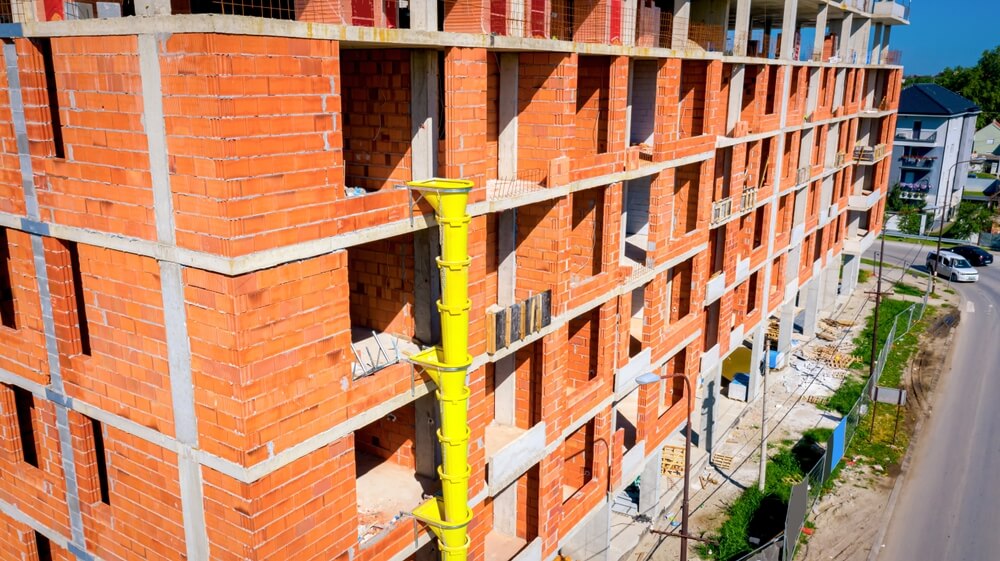
Property development and construction
Property development brings together land, planning, construction and finance, and the legal issues run across the whole life of a scheme. We act for developers, landowners and investors across South Wales and the South West, securing sites, structuring deals, dealing with construction arrangements, and selling or letting the finished scheme, and we flag the points where the law in Wales differs from England.
How do you secure a development site?
Before committing to a site, a developer usually wants control without an unconditional commitment to buy. The main ways to achieve that are an option (the right but not the obligation to buy, often while planning is pursued), a conditional contract (binding once planning is granted), and a promotion agreement (a promoter obtains planning and shares in the sale proceeds). Each suits different circumstances and attitudes to risk, and the choice has tax and timing consequences. Overage, a further payment if value is later unlocked, usually by planning, is often part of the deal. Restrictive covenants and third-party rights on the title are a common obstacle to development, and need to be identified before a scheme is committed.
How does planning differ in Wales?
Planning is devolved, so Wales has its own system and policy framework, separate from England’s. One practical difference is developer contributions: the Community Infrastructure Levy has not been adopted by Welsh authorities in the way it has in parts of England, so in Wales contributions are generally secured through section 106 agreements instead. These obligations run with the land and can materially affect whether a scheme stacks up, so they need to be understood early. We work alongside planning consultants on the planning strategy for a site. Conservation areas, listed buildings and tree preservation orders can all constrain what is achievable, and need checking early.
What is changing on building safety in Wales?
The Building Safety Act 2022 created a stricter regime for higher-risk buildings (broadly those at least 18 metres or seven storeys). In England this has been in force since 2023, but in Wales the new building-safety regime commences on 1 July 2026, with local authorities as the building control authority and a wider definition that can catch a building with a single residential unit. For mixed-use and residential-led schemes in Wales, this changes how a project is designed, approved and recorded, and we help developers understand the implications.
Construction contracts and warranties
Most schemes are built under a standard form of building contract (commonly JCT or NEC), supported by collateral warranties and third-party rights that give funders, buyers and tenants direct recourse against the contractor and consultants. We deal with the property and security side and coordinate with specialist construction advisers on the contract terms. Health and safety duties under the construction regulations, and the phasing of works to satisfy planning conditions, also shape how a scheme is delivered. Collateral warranties are negotiated so that funders and future occupiers have the direct protection they expect. Development funding and the lender’s security are covered on our commercial property finance page, and a construction or development dispute is handled by our business disputes team.
What does it cost?
We charge by the hour and give you a written estimate at the outset, updated as a scheme develops. VAT and disbursements, including the transaction tax on the land (LTT in Wales or SDLT in England), Land Registry fees and search fees, are payable in addition.
Speak to our commercial property team
From the first site appraisal to the sale of the last unit, we will help you manage the legal risk. Request a callback and we will get back to you.
We spot the Welsh divergences, planning, building safety, tax, that can make or break a scheme, and plan around them.
Our approachClear advice. Practical next steps.
Every property development & construction matter is different. We start by understanding your situation before we recommend an approach.
We won't push you toward a process that doesn't fit. We won't drag things out. And we'll always tell you what something will cost before we start it.
- A dedicated specialist for your matter, backed by the wider Robertsons commercial property team
- Transparent pricing: clear written costs before any work begins
- Plain-English advice: no jargon, no surprises
- Offices across South Wales and the South West
Real stories from real clients
“Great firm and helped with all my legal needs.”Zubin Jones
“First class from beginning to end.”Julie Anne Phillips
“Excellent service. Friendly, professional and efficient.”Fiona Guthrie Bristol
Who would be looking after you?
Some of your property development & construction team at Robertsons.
Caitlin Kloet
Caitlin is a solicitor in the Commercial Property department. A first-class Cardiff University graduate who trained and qualified at the firm, she advises on a range of commercial property matters, from land acquisition to landlord and tenant work.
View profileLeah Donovan
Leah is a Trainee Solicitor in the Commercial Property department. She works on commercial property transactions including sales, acquisitions and leases, assisting the department's fee-earners and supporting clients throughout their matter. She is due to qualify as a solicitor in 2026.
View profileMartell Williams
Martell is a Consultant Solicitor and one of the firm's founders, having joined when Robertsons was formed in 1985. A Welsh speaker with over 40 years' experience, he is renowned across South Wales for his commercial property expertise, particularly land acquisitions and landlord and tenant work.
View profileMuireann Sheedy
Muireann is a Director in the Property department. A specialist in commercial property since training with the firm, she advises on acquisitions, disposals, development and landlord and tenant work, primarily for industrial and office premises, as well as affordable housing.
View profileQuestions clients ask us about property development & construction
Most developments require new or upgraded infrastructure and services, roads, drainage, water, electricity, gas, and telecommunications, and these are dealt with through a range of agreements with the relevant authorities and utility providers. Common agreements include: Section 38 agreements (under the Highways Act 1980) for the adoption of new roads by the highway authority; Section 278 agreements for works to existing highways; Section 104 agreements (under the Water Industry Act 1991) for the adoption of new sewers; and connection agreements with utility providers for water, electricity, gas, and telecoms. These agreements often require bonds or financial security to guarantee completion of the works to an adoptable standard. They can significantly affect the cost, programme, and phasing of a development, and must be coordinated with the construction works and the planning obligations. Specialist advice ensures these agreements are properly negotiated and aligned with the overall development.
Restrictive covenants are obligations in a property's title that restrict what can be done with the land, for example, prohibiting building, limiting the number or type of structures, or restricting use to a particular purpose. They can be a significant obstacle to development: a covenant restricting a site to agricultural use or prohibiting building would prevent a residential or commercial scheme. Before developing, a developer must identify any restrictive covenants affecting the site and assess whether they would be breached. Where a covenant stands in the way of development, the options include: obtaining the consent of the person with the benefit of the covenant (if they can be identified); applying to the Upper Tribunal (Lands Chamber) to modify or discharge the covenant under Section 84 of the Law of Property Act 1925; or obtaining restrictive covenant indemnity insurance. Each option carries different costs, timescales, and risks, and specialist advice is essential.
Due diligence on a development site is extensive and goes well beyond a standard property purchase. It includes: full title investigation, identifying any rights, restrictions, restrictive covenants, or third-party interests affecting the site; planning investigation, confirming the planning status and any permissions, conditions, or obligations; environmental investigation, including contaminated land assessment, particularly important for brownfield sites; ground condition and geotechnical surveys to assess buildability; assessment of access, rights of way, and the availability of services and utilities; checking for any infrastructure or highways agreements required; flood risk assessment; and assessment of the Section 106 and, in England, CIL liability. The buyer must also confirm the viability of the intended scheme in light of all these factors. Development site due diligence requires coordinated legal, planning, environmental, and technical advice, and should be completed before the purchase is committed, or the land secured through an option or conditional contract pending the investigation.
A building contract is the agreement between the developer (the employer) and the contractor that governs the construction works, setting out the scope of work, the price, the timetable, the payment terms, and the allocation of risk. The two most widely used families of standard form building contracts in England and Wales are the JCT (Joint Contracts Tribunal) suite and the NEC (New Engineering Contract) suite. JCT contracts are traditional and widely used across building projects; NEC contracts emphasise collaborative working and active project management and are common on infrastructure and public sector projects. The choice of contract and the amendments made to it significantly affect the allocation of risk between the parties. Building contracts are usually supported by collateral warranties giving funders, purchasers, and tenants direct rights against the contractor and consultants. Taking specialist construction law advice on the form and terms of the building contract is important before works begin.
A conditional contract is a contract for the sale of land that becomes binding only if specified conditions are met, most commonly the grant of satisfactory planning permission. Unlike an option, where the developer has a choice whether to proceed, a conditional contract commits both parties to complete once the conditions are satisfied. This gives the landowner more certainty of a sale than an option, while still protecting the developer against having to buy land that cannot be developed. The contract must define the conditions precisely, what planning permission is acceptable, the timescale for obtaining it, and what happens if it is refused or granted subject to onerous conditions. Conditional contracts are used where both parties want commitment to the transaction subject only to the planning outcome. The choice between an option and a conditional contract depends on the parties' commercial objectives and attitude to risk.
A promotion agreement is an arrangement under which a promoter, often a developer or land promoter, agrees to use their expertise and resources to obtain planning permission on a landowner's land, in return for a share of the proceeds when the land is sold with the benefit of that permission. Unlike an option, where the developer intends to buy the land themselves, in a promotion agreement the promoter's interest is aligned with the landowner's: both want to maximise the sale price, because the promoter is paid a percentage of the net proceeds. The land is then sold on the open market to a third party. Promotion agreements are common for strategic land, sites with longer-term development potential. They suit landowners who want to benefit from a professional's planning expertise without selling at an early stage, and they avoid the potential conflict of interest inherent in an option, where the developer wants to keep the price low. Careful drafting of the promoter's obligations and the proceeds calculation is essential.
A Section 106 agreement, made under Section 106 of the Town and Country Planning Act 1990, is a legal agreement between a developer and the local planning authority that imposes planning obligations as a condition of planning permission. These obligations are intended to make a development acceptable that would otherwise be refused, by mitigating its impact. Common Section 106 obligations include: provision of affordable housing; financial contributions towards local infrastructure, schools, or transport; provision of open space or community facilities; and restrictions on how the development is used or occupied. Section 106 obligations run with the land and bind successive owners. They can represent a significant cost and constraint on a development, and the terms are often heavily negotiated with the planning authority. A developer must factor Section 106 obligations into the viability assessment for a scheme, they can materially affect whether a development is profitable.
An option agreement gives a developer the right, but not the obligation, to buy a piece of land at a future date, usually within a defined period and at a price determined by a formula or valuation. It allows the developer to secure control of a site while they pursue planning permission, without committing to the purchase until they know the development is viable. If planning permission is obtained and the developer chooses to proceed, they exercise the option and complete the purchase; if not, they can walk away, usually losing only the option fee. Option agreements are commonly used for sites with development potential where planning is uncertain. They must be carefully drafted to define the option period, the price mechanism, the conditions for exercise, and the obligations on each party, and they are protected by registration against the land. Both landowners and developers should take specialist advice before entering one.
An overage agreement, sometimes called clawback, entitles a seller of land to receive an additional payment from the buyer if the value of the land increases following a specified event, most commonly the grant of planning permission for development or a more valuable use. In a development context, overage protects a landowner who sells land that may have future development potential, ensuring they share in any uplift in value rather than seeing the buyer take all the profit from a subsequent planning gain. The agreement must define the trigger event, the method of calculating the overage payment, the period during which it applies, and how the obligation is secured against the land, usually by a restriction at HM Land Registry. Overage provisions are a frequent source of dispute if poorly drafted, so precise drafting and specialist advice are essential for both parties.
The Community Infrastructure Levy (CIL) is a charge that local planning authorities in England can impose on new development to fund infrastructure needed to support growth in their area, such as roads, schools, and community facilities. Unlike Section 106 obligations, which are negotiated and specific to a particular development, CIL is a standardised charge calculated according to a published charging schedule based on the floor area of new development. Not all authorities have adopted CIL, and the rates vary between areas. CIL is payable on commencement of development and can be a significant cost. In Wales, CIL has not been adopted in the same way, Welsh authorities rely primarily on Section 106 agreements for developer contributions. Developers must check whether CIL applies in the relevant area and factor it into the project costs, alongside any Section 106 obligations.
Property development involves a wide range of legal issues across the life of a project. At the acquisition stage, these include securing the land through an appropriate mechanism (such as an option, conditional contract, or promotion agreement), carrying out title and planning due diligence, and addressing any restrictive covenants or third-party rights affecting the site. At the planning stage, issues include planning permission, Section 106 agreements, and the Community Infrastructure Levy. During construction, building contracts, collateral warranties, and health and safety obligations arise. And on completion, the disposal of the developed units, through sales or leases, must be structured. Tax considerations, including VAT, SDLT or LTT, and capital allowances, run throughout. Development is one of the most complex areas of property law, and coordinated legal, planning, and tax advice from an early stage is essential to managing risk.
Planning is central to the viability of any development, and a developer should investigate the planning position thoroughly before committing to a site. Key issues include: whether the site has planning permission, and if so, its terms and any conditions or obligations attached; the site's designation in the local development plan and whether the intended use is consistent with planning policy; planning history, including any previous refusals or enforcement action; whether the development would require the discharge of any conditions or a variation of existing permission; the likely Section 106 obligations and, in England, CIL liability; and any constraints such as conservation area status, listed buildings, tree preservation orders, or environmental designations. Where planning permission has not yet been obtained, the developer should consider securing the land through an option or conditional contract rather than an outright purchase. Specialist planning advice should be obtained before acquisition.
Have a question that isn't covered here? Speak to one of our property development & construction specialists directly.
Practical advice you can read at your own pace
Across South Wales and the South West
Cardiff
6 Park Place, Cardiff, CF10 3RS
029 2023 7777
Visit office pageSwansea
Princess Quarter, 18 Princess Way, Swansea, SA1 3LW
01792 720 721
Visit office pageBarry
6 St Nicholas Road, Barry, CF62 6QW
01446 745 660
Visit office pageBristol
Trym Lodge,1 Henbury Road, Westbury-On-Trym, Bristol, BS9 3HQ
Appointment only0117 325 9545
Visit office pageNewport
8a Pentonville, Newport, NP20 5HB
Appointment only01633 742 741
Visit office pageGet started with our property development & construction team
Confidential, no pressure, and we'll explain what's involved before you commit to anything.