
Commercial Property Solicitors in Cardiff
Buying or selling commercial property in Cardiff, offices, shops, industrial units or land? We act for businesses and investors across South Wales, with clear advice on title, searches and the Welsh tax, and a written estimate of costs at the outset.
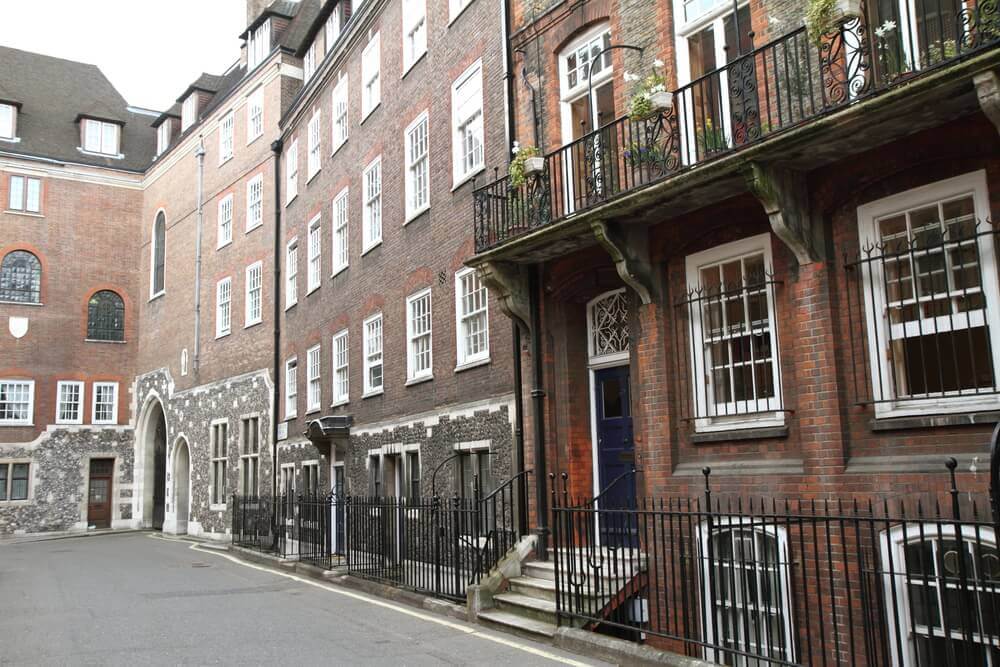
Commercial property sales and purchases from our Cardiff office
Buying or selling commercial property in Cardiff, offices, retail, industrial units or land, is a more involved process than a residential deal, with heavier due diligence and significant tax to weigh up. We act for businesses, investors and owner-occupiers across Cardiff and South Wales, on both purchases and sales. The full process, from heads of terms to registration, is set out on our commercial property sales and purchases page. Here we focus on what is local.
Buying or selling commercial property in Cardiff?
We act across the Cardiff and South Wales market, city-centre offices, retail, and the industrial units and estates around the city and the valleys. Due diligence is the heart of any purchase: investigating title, raising the Commercial Property Standard Enquiries, and commissioning searches. One that matters particularly here is the coal-mining search, much of South Wales sits over former coal workings, so a mining search is a standard and important check that can affect a property’s value and even its insurability. Environmental risk deserves close attention on the region’s many former-industrial and brownfield sites.
How is the tax different in Wales?
Tax is one of the biggest differences from a residential deal, and in Wales it works differently from England. A purchase attracts Land Transaction Tax, administered by the Welsh Revenue Authority, with its own rates, thresholds and a different filing deadline from England’s Stamp Duty Land Tax. VAT can also apply where the seller has opted to tax, which affects both cash flow and the tax calculation. We work out what is due, deal with the LTT return, and settle the position on fixtures and capital allowances in the contract rather than leaving it to chance.
How our Cardiff team helps
We guide you from heads of terms through to completion and registration, keeping the deal moving and flagging the risks at each stage, including on tenanted property, where you are buying an income stream and the leases as well as the building. We charge by the hour and give you a written estimate at the outset; VAT and disbursements (LTT, Land Registry and search fees) are payable in addition. For taking or granting a lease, see commercial leases in Cardiff, and for buying for income, property investment in Cardiff. The Coal Authority provides the mining reports used in a South Wales search.
Robertsons Solicitors in Cardiff
Find us: 6 Park Place, Cardiff CF10 3RS
Call Cardiff: 029 2023 7777
Tell us your access needs and we’ll do what we can to accommodate you.
Full Cardiff office details & directions →On a Cardiff deal the tax is Land Transaction Tax, not SDLT, and a coal-mining search is routine, we handle the Welsh specifics as a matter of course.
Our approachClear advice. Practical next steps.
Every commercial property sales & purchases matter is different. We start by understanding your situation before we recommend an approach.
We won't push you toward a process that doesn't fit. We won't drag things out. And we'll always tell you what something will cost before we start it.
- A dedicated specialist for your matter, backed by the wider Robertsons commercial property team
- Transparent pricing: clear written costs before any work begins
- Plain-English advice: no jargon, no surprises
- Offices across South Wales and the South West
Real stories from real clients
“Very efficient and professional in tackling a difficult situation. Immediate communication so that we were aware of what was going on.”Sandra Seldon
“Professional and always on hand to take your calls. Nothing is too much trouble and keen to get things moving. Would highly recommend.”Hayley Mccarthy
“Used the services of Robertsons recently and was very pleased with the help that they gave me and with the outcome. Highly recommended.”Mark Tree
Who would be looking after you?
Some of your commercial property sales & purchases team at Robertsons.
Caitlin Kloet
Caitlin is a solicitor in the Commercial Property department. A first-class Cardiff University graduate who trained and qualified at the firm, she advises on a range of commercial property matters, from land acquisition to landlord and tenant work.
View profileLeah Donovan
Leah is a Trainee Solicitor in the Commercial Property department. She works on commercial property transactions including sales, acquisitions and leases, assisting the department's fee-earners and supporting clients throughout their matter. She is due to qualify as a solicitor in 2026.
View profileMartell Williams
Martell is a Consultant Solicitor and one of the firm's founders, having joined when Robertsons was formed in 1985. A Welsh speaker with over 40 years' experience, he is renowned across South Wales for his commercial property expertise, particularly land acquisitions and landlord and tenant work.
View profileMuireann Sheedy
Muireann is a Director in the Property department. A specialist in commercial property since training with the firm, she advises on acquisitions, disposals, development and landlord and tenant work, primarily for industrial and office premises, as well as affordable housing.
View profileQuestions clients ask us about commercial property sales & purchases
Buying a tenanted commercial property, an investment purchase, involves additional considerations because the buyer is acquiring not just the building but the income stream and the landlord's obligations under the existing leases. Due diligence must include: a detailed review of all leases, including rent, term, rent review provisions, repairing obligations, and break clauses; verification of the tenants' financial standing and rent payment history; checking for any arrears, disputes, or breaches; and confirming the service charge position. The leases are assigned to the buyer on completion, and the buyer steps into the landlord's role. Where the property is sold as a transfer of a going concern, there may be VAT advantages. The strength and security of the income stream is central to the value of an investment property, making thorough lease due diligence essential.
A commercial property purchase typically takes between six and twelve weeks from agreement of heads of terms to completion, though complex transactions can take considerably longer. The timeline depends on the nature of the property, the extent of due diligence required, whether the property is tenanted, the complexity of title and planning issues, and how quickly the parties and their advisers respond. Transactions involving development land, environmental concerns, multiple tenancies, or financing arrangements take longer. Unlike residential transactions, there is no chain in the conventional sense, but the due diligence process is more extensive. Setting a realistic timetable at the outset, and agreeing it in the heads of terms, helps keep the transaction on track.
Commercial property transactions carry significant tax implications. In England, Stamp Duty Land Tax (SDLT) applies to commercial property at non-residential rates, which differ from residential rates and have their own thresholds; in Wales, Land Transaction Tax (LTT) applies at non-residential rates. VAT may be chargeable on the purchase price depending on the property and whether the seller has opted to tax. Capital allowances may be available on certain fixtures within the building, which can produce valuable tax relief for the buyer, this needs to be addressed in the contract. Capital gains tax or corporation tax may affect the seller. The tax position can significantly affect the overall cost and structure of the transaction, and early advice from both solicitors and accountants is strongly recommended.
Commercial conveyancing is the legal process of transferring ownership of commercial property, offices, shops, industrial units, land, and investment property. While it shares the basic framework of residential conveyancing, it is considerably more complex. Commercial transactions involve more detailed due diligence, more significant tax considerations including VAT and capital allowances, more complex title and planning issues, and frequently the transfer of existing tenancies and commercial leases. The parties are usually businesses rather than individuals, and the contracts are negotiated rather than based on standard residential forms. There is also far less statutory consumer protection, the principle of caveat emptor (buyer beware) applies more strongly, placing the onus firmly on the buyer to investigate the property thoroughly before committing.
Due diligence on a commercial property purchase is extensive and is the buyer's responsibility. It includes: investigating title to confirm the seller owns what they are selling and identifying any rights, restrictions, or encumbrances; reviewing planning permissions and confirming the property can lawfully be used for the intended purpose; checking building regulations compliance; reviewing any existing leases and the financial standing of tenants; assessing environmental risk, including contaminated land; commissioning a building survey to assess physical condition; reviewing the VAT position; and confirming compliance with health and safety, fire safety, and energy efficiency requirements. The buyer raises detailed enquiries (Commercial Property Standard Enquiries) and the seller responds. Thorough due diligence is critical, once contracts are exchanged, the buyer generally takes the property as it is.
Environmental risk is a significant consideration in commercial property purchases, particularly for industrial, former industrial, or brownfield sites. The principal concern is contaminated land: under the contaminated land regime, the current owner or occupier of land can be held liable for the cost of cleaning up historic contamination, even if they did not cause it. This liability can be very substantial. An environmental search is the starting point, and where it reveals concerns, a more detailed environmental assessment, a Phase 1 or Phase 2 environmental survey, may be needed. Other environmental issues include flood risk, the presence of asbestos in buildings, energy efficiency requirements (Minimum Energy Efficiency Standards), and Japanese knotweed. Environmental liabilities can be managed through contractual indemnities, environmental insurance, or price adjustments, but they must be identified before exchange.
At completion of a commercial property transaction, the purchase price (less any deposit already paid) is transferred from the buyer's solicitor to the seller's solicitor, and legal ownership passes to the buyer. The transfer deed is completed, and where the property is tenanted, the leases and any rent deposits are assigned to the buyer. After completion, the buyer's solicitor must: pay any SDLT or LTT due and submit the return within the required time limit; register the buyer as the new owner at HM Land Registry; and where the property was tenanted, notify the tenants of the change of landlord and deal with any apportionment of rent and service charge. Completion is usually a more involved process than in residential transactions, reflecting the greater complexity of commercial property and the need to deal with tenancies, tax, and registration.
A commercial property survey is a physical inspection and assessment of the building's condition by a chartered surveyor. Unlike residential transactions, where a mortgage valuation may be the minimum, a commercial buyer should almost always commission a full building survey, because the principle of buyer beware applies strongly and there is limited recourse against the seller for defects discovered after completion. A commercial building survey assesses the structural condition, the state of repair, building services, and any defects requiring attention, and can inform price negotiations and future maintenance budgeting. For older or industrial buildings, specialist surveys, for asbestos, structural engineering, or environmental matters, may also be appropriate. The cost of a thorough survey is modest compared to the cost of discovering serious defects after purchase.
An overage agreement, also called a clawback, is a contractual arrangement under which the seller of land or property is entitled to receive an additional payment from the buyer if a specified future event occurs that increases the value of the land. The most common trigger is obtaining planning permission for development. Overage protects a seller against the risk of selling land cheaply only to see the buyer profit from a subsequent change of use or development. Overage agreements must be carefully drafted to define the trigger event, the calculation of the additional payment, the duration of the obligation, and how it is secured against the land, usually by a restriction at HM Land Registry. Both buyers and sellers should take specialist advice, as poorly drafted overage provisions are a frequent source of dispute.
VAT on commercial property is one of the most complex areas of commercial conveyancing. The default position is that the sale of commercial property is exempt from VAT, but the seller can exercise an option to tax, which makes the sale standard-rated at 20%. Newly constructed commercial buildings (within three years of completion) are standard-rated automatically. Whether VAT applies significantly affects the buyer: VAT-registered buyers can usually recover the VAT, but it affects cash flow and the SDLT or LTT calculation, which is charged on the VAT-inclusive price. Where a tenanted commercial property is sold as a transfer of a going concern (TOGC), the sale may be outside the scope of VAT altogether if specific conditions are met. The VAT position must be clarified early, it affects the price, the tax, and the structure of the deal.
The searches required for a commercial property purchase are broadly similar to residential but often more extensive. They include: a local authority search, revealing planning history, road schemes, and enforcement notices; a drainage and water search; an environmental search, which is particularly important for commercial sites given the risk of contaminated land liability; a chancel repair search where relevant; and depending on location, coal mining, brine, or other mineral searches, coal mining searches are commonly needed across much of Wales. Additional searches may be appropriate depending on the property and its intended use, for example, a flood risk search, a highways search, or a utilities and services search. The buyer's solicitor advises on which searches are appropriate for the specific property and transaction.
Have a question that isn't covered here? Speak to one of our commercial property sales & purchases specialists directly.
Practical advice you can read at your own pace
Across South Wales and the South West
Cardiff
6 Park Place, Cardiff, CF10 3RS
029 2023 7777
Visit office pageSwansea
Princess Quarter, 18 Princess Way, Swansea, SA1 3LW
01792 720 721
Visit office pageBarry
6 St Nicholas Road, Barry, CF62 6QW
01446 745 660
Visit office pageBristol
Trym Lodge,1 Henbury Road, Westbury-On-Trym, Bristol, BS9 3HQ
Appointment only0117 325 9545
Visit office pageNewport
8a Pentonville, Newport, NP20 5HB
Appointment only01633 742 741
Visit office pageGet started with our commercial property sales & purchases team
Confidential, no pressure, and we'll explain what's involved before you commit to anything.