
Armed Forces Compensation Solicitors in Cardiff
Injured or made ill by service and based in or around Cardiff? The Armed Forces Compensation Scheme can pay compensation without you proving fault, and we help serving personnel and veterans across South Wales get the right award, including on appeal.
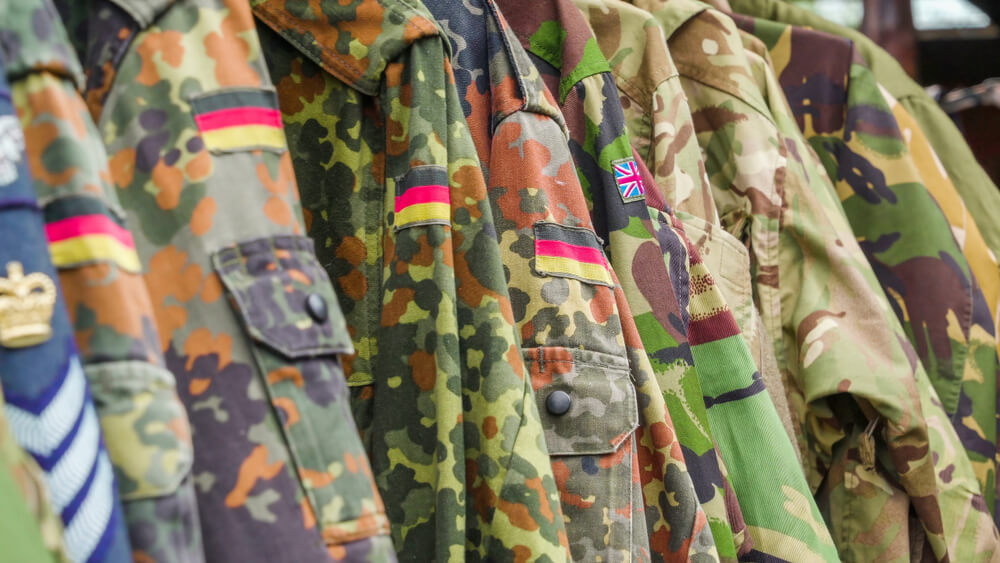
AFCS claims from our Cardiff office
If you were injured or fell ill because of service, the Armed Forces Compensation Scheme can pay compensation without you having to prove anyone was at fault, and we act for serving personnel and veterans across Cardiff and South Wales. How the scheme works, the tariff and what you can be awarded are set out in full on our armed forces compensation page. Here we focus on how we help locally.
Help with an AFCS claim or appeal in Cardiff?
South Wales has a large forces and veteran community, and we help people across it with AFCS claims, particularly the harder cases where a claim has been turned down or under-assessed. We argue for the correct tariff level, gather the right medical evidence, and represent you through reconsideration and, if needed, an appeal to the independent First-tier Tribunal. We will always point you to the free welfare support that runs alongside a legal claim, from the Royal British Legion, SSAFA and the Veterans Welfare Service.
Can you use Welsh at a tribunal?
Yes. For a tribunal hearing in Wales you have the right to use Welsh, you and your witnesses can give evidence in Welsh, and a bilingual hearing with a Welsh-speaking judge can be arranged, with no delay or disadvantage to your case. As a firm rooted in Wales, we can prepare and present your appeal in Welsh if that is what you would prefer.
How our Cardiff team helps
We act for serving personnel and veterans across Cardiff and South Wales on AFCS claims and the appeals that often follow, giving you a straight view of the level your injury should attract and handling the evidence and paperwork. An AFCS award does not stop you bringing a separate civil claim against the MoD where fault can be shown, for a mental-health condition or other injury, we can deal with the AFCS claim and any civil claim together. You can read the official scheme guidance from Veterans UK, and the Royal British Legion offers free welfare support.
Robertsons Solicitors in Cardiff
Find us: 6 Park Place, Cardiff CF10 3RS
Call Cardiff: 029 2023 7777
Tell us your access needs and we’ll do what we can to accommodate you.
Full Cardiff office details & directions →The AFCS isn't automatic, getting the right tariff level can make an enormous difference, and we help veterans across South Wales get it right.
Our approachClear advice. Practical next steps.
Every armed forces compensation scheme claims matter is different. We start by understanding your situation before we recommend an approach.
We won't push you toward a process that doesn't fit. We won't drag things out. And we'll always tell you what something will cost before we start it.
- A dedicated specialist for your matter, backed by the wider Robertsons military claims team
- Transparent pricing: clear written costs before any work begins
- Plain-English advice: no jargon, no surprises
- Offices across South Wales and the South West
Real stories from real clients
“I would definitely recommend Robertsons Solicitors for their professionalism and communication throughout the whole process.”Msbernadette Hinder Swansea · Claim
“Amazing solicitors from start to finish. Couldn't do enough for me, always so helpful, and kept me updated on everything. I could always speak to someone. Would recommend to anyone needing a solicitor.”Sarah Macey Dispute
“Excellent service. Friendly, professional and efficient.”Fiona Guthrie Bristol
Who would be looking after you?
Some of your armed forces compensation scheme claims team at Robertsons.
Questions clients ask us about armed forces compensation scheme claims
Yes, if you disagree with a Veterans UK decision on your AFCS claim, there is a two-stage appeals process. The first stage is a reconsideration request, made to Veterans UK within one year of the original decision. Veterans UK will review the decision, taking into account any additional evidence submitted. If you remain dissatisfied after reconsideration, you can appeal to the First-tier Tribunal (War Pensions and Armed Forces Compensation Chamber), an independent judicial body. The tribunal can uphold, vary, or overturn the Veterans UK decision. Appeals must generally be lodged within one year of the reconsideration decision. Legal representation at tribunal significantly improves the prospects of success, particularly in complex medical cases.
No, receiving an AFCS award does not automatically bar a civil negligence claim against the Ministry of Defence. The two routes are legally distinct: the AFCS is a no-fault scheme providing tariff-based compensation; a civil negligence claim requires proof of fault and compensates actual loss. Where the MoD's negligence caused or contributed to an injury, a civil claim may recover significantly more than the AFCS tariff, including full loss of earnings, care costs, and other heads of loss that the AFCS does not cover. Any AFCS payments received will generally be taken into account in calculating the net damages in a civil claim to avoid double recovery. Veterans considering civil litigation should take specialist legal advice on the interaction between the two routes before accepting a final AFCS settlement.
Not directly, making an AFCS claim does not affect entitlement to a service pension or other benefits. However, where a claimant receives both an AFCS award and a War Pension for the same condition (possible where the injury straddles the April 2005 scheme boundary), abatement rules may apply to prevent double compensation for the same injury. The GIP element of an AFCS award is tax-free and index-linked, and does not affect most means-tested benefits. Claimants receiving Universal Credit or other means-tested benefits should take advice on how an AFCS lump sum may affect their entitlement, as capital thresholds apply. Veterans UK can provide guidance on the interaction with other service benefits.
Compensation under the AFCS is calculated using a tariff system of 15 levels, from Level 15 (the lowest) to Level 1 (the most serious). Each level corresponds to a lump sum payment, ranging from around £1,000 at Level 15 to over £650,000 at Level 1 for the most severe injuries. Where a claimant has multiple injuries from the same or different incidents, the tariff awards can be combined, the highest award is paid in full, with 30% of the second-highest and 15% of the third-highest. For the most serious injuries, those at Levels 1 to 8, a Guaranteed Income Payment (GIP) is also payable in addition to the lump sum. Tariff amounts are updated periodically by the government.
The time limit for making an AFCS claim is seven years from the date of the injury, the date a condition was first diagnosed, or the date of medical discharge, whichever is latest. This is more generous than most civil limitation periods. However, there is an important exception: claims for the most serious injuries at tariff Levels 1 to 8 can be made at any time, with no time limit. Where a condition deteriorates significantly after an initial award, a claim for a reassessment can also be made. If you are unsure whether you are still within time, taking legal advice is important, some claimants believe they have missed the deadline when they have not.
The most important evidence for an AFCS claim is medical evidence linking the injury or illness to service. This includes: service medical records showing treatment during service; civilian medical records and specialist reports; a clear statement from the claimant describing how the injury occurred and its connection to service; and where possible, a report from an independent medical expert commenting on causation. Service records confirming the nature of duties, deployments, and incidents may also be relevant. Veterans UK can request records on the claimant's behalf, but claimants should obtain their own copies where possible. For mental health claims, evidence from a psychiatrist or psychologist with experience of military personnel is particularly valuable.
The AFCS covers a wide range of physical and mental health conditions caused or worsened by service, including: physical injuries from training or combat; hearing loss and tinnitus; musculoskeletal conditions; traumatic brain injury; post-traumatic stress disorder and other mental health conditions; and illness caused by service conditions or environment. The injury or illness must have been caused or materially contributed to by service, conditions that are entirely unrelated to service are not covered. Pre-existing conditions can be covered where service has materially worsened them. The scheme also covers injuries sustained during authorised off-duty activities in some circumstances. There is no minimum threshold of injury, claims for relatively minor injuries are accepted, though compensation levels vary significantly by severity.
A Guaranteed Income Payment (GIP) is a tax-free, index-linked monthly payment made for life to claimants whose injuries are assessed at tariff Levels 1 to 8, the most serious categories under the AFCS. It compensates for the long-term impact of the injury on the claimant's earning capacity and quality of life. The amount of the GIP is calculated as a percentage of the claimant's earnings at the time of injury and is paid in addition to the lump sum tariff award. GIPs are uprated annually in line with inflation. For the most severely injured veterans, the GIP can represent a very significant lifetime income, making the correct assessment of tariff level critically important.
The Armed Forces Compensation Scheme (AFCS) is a government scheme that provides compensation to serving and former members of the UK armed forces who have suffered injury, illness, or death caused by service on or after 6 April 2005. It covers all three services, Army, Royal Navy, and Royal Air Force, as well as reservists on active duty. The scheme is no-fault: you do not need to prove that anyone was negligent to make a claim. You simply need to show that your injury or illness was caused or made worse by your service. Claims are administered by Veterans UK, part of the Ministry of Defence. The AFCS replaced the War Pension Scheme for injuries occurring from April 2005 onwards.
AFCS claims are made to Veterans UK using the prescribed claim form, setting out the nature of the injury or illness, when it occurred, and how it is connected to service. Supporting evidence, medical records, service records, and any specialist medical reports, should be submitted with the claim. Veterans UK will then assess the claim, which may involve requesting further medical information or commissioning a medical examination. A decision is usually issued within a few months of receiving all the information required, though complex cases can take longer. Claimants are notified of the decision in writing, including the tariff level awarded and the reasons. If you disagree with the decision, you have the right to seek a reconsideration and, if still dissatisfied, to appeal.
The Veterans UK reconsideration process involves a fresh review of the original decision by a different caseworker, taking into account any new evidence or arguments. It is the first step before a formal tribunal appeal. If reconsideration does not resolve the dispute, an appeal is lodged with the First-tier Tribunal (War Pensions and Armed Forces Compensation Chamber). The tribunal hearing is conducted by a judge, often with a medical member. Both sides can present evidence and legal arguments. The tribunal is independent of Veterans UK and approaches the case afresh. Hearings are relatively informal compared to civil court proceedings but still require careful preparation, particularly the medical evidence, which is often central to the outcome. Legal advice and representation at this stage is strongly recommended.
Veterans can access support from several sources when making an AFCS claim. Service charities, including the Royal British Legion, SSAFA, and Help for Heroes, provide welfare support and claims assistance. The Veterans Welfare Service, run by Veterans UK, offers casework support. Specialist solicitors with experience in military compensation claims can advise on the strength of a claim, help gather evidence, assist with appeals, and advise on whether a parallel civil negligence claim is appropriate. Legal representation is particularly valuable at tribunal stage and in complex cases involving multiple injuries or serious conditions. Veterans should not assume that the initial Veterans UK decision is final, a significant proportion of appealed decisions are overturned or improved.
Have a question that isn't covered here? Speak to one of our armed forces compensation scheme claims specialists directly.
Across South Wales and the South West
Cardiff
6 Park Place, Cardiff, CF10 3RS
029 2023 7777
Visit office pageSwansea
Princess Quarter, 18 Princess Way, Swansea, SA1 3LW
01792 720 721
Visit office pageBarry
6 St Nicholas Road, Barry, CF62 6QW
01446 745 660
Visit office pageBristol
Trym Lodge,1 Henbury Road, Westbury-On-Trym, Bristol, BS9 3HQ
Appointment only0117 325 9545
Visit office pageNewport
8a Pentonville, Newport, NP20 5HB
Appointment only01633 742 741
Visit office pageGet started with our armed forces compensation scheme claims team
Confidential, no pressure, and we'll explain what's involved before you commit to anything.