
High-Rise & Building Safety Act
Buying or selling a flat in a taller building means extra checks on fire safety and cladding, and rules that differ in Wales and England. We handle the building-safety side and tell you where you stand.
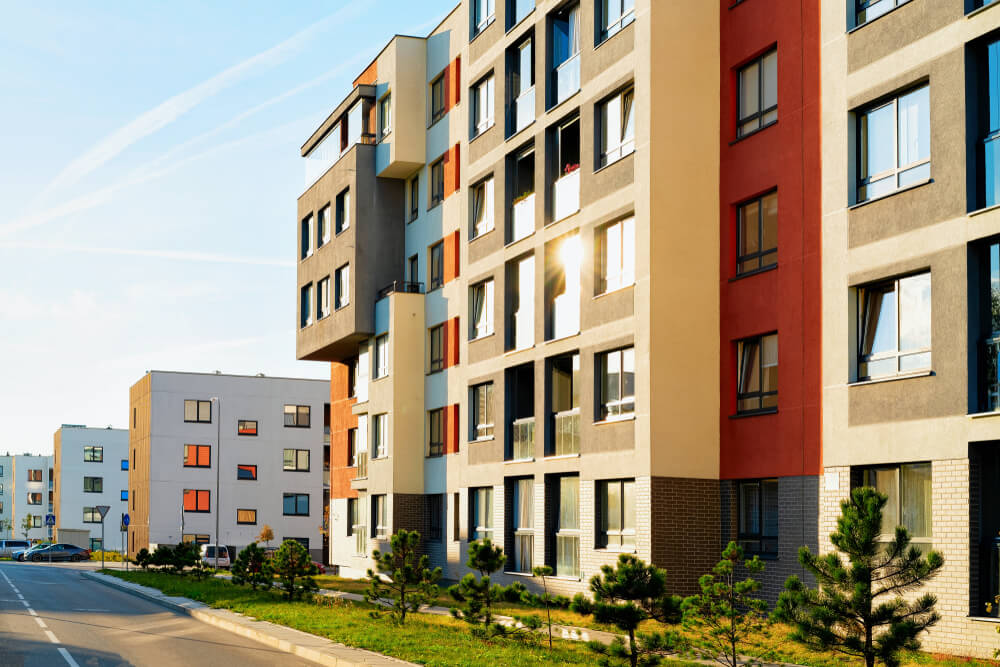
Why building safety matters when buying a flat
Since the Grenfell Tower fire, buying or selling a flat in a taller building involves extra checks on fire safety, and they can make or break a transaction. Lenders, buyers and the law now pay close attention to a building’s external walls and cladding, who is responsible for fixing any defects, and who has to pay. For a flat in a building of around 11 metres or more, this means additional legal work and documentation that did not exist a few years ago. Getting to the bottom of a building’s safety status early is the key to a smooth sale or purchase.
What extra checks apply to a flat in a tall building?
On top of the usual conveyancing, we investigate the building’s fire-safety and remediation position: whether any external wall or cladding issues have been identified, whether a survey such as an EWS1 form exists, what remediation is planned, and, crucially, who is responsible for paying for it. We review the building-safety certificates and information the seller or landlord must provide, and report what it all means for you, including any future cost exposure. Where a building’s status is unclear, we tell you, because that is often what holds up a mortgage or a sale.
Are the rules the same in Wales and England?
No, and this is the single biggest thing to understand. Building safety is one of the few areas of conveyancing where the law genuinely differs across the border. In England, the Building Safety Act 2022 sets up a regime of leaseholder cost protections built around the idea of a “qualifying lease”, overseen by the Building Safety Regulator. Wales has taken its own path, with the Building Safety (Wales) Act 2026 and a Welsh building-safety programme that does not use the same “qualifying lease” test, its support is aimed at all leaseholders. The right rules depend on where the flat is, and we advise you on the ones that apply to your building.
Mortgages and cladding
Whether you can mortgage a flat in an affected building depends on the building’s remediation status and the individual lender. The picture has improved as remediation schemes have progressed and developers have signed up to fund repairs, and many lenders will now lend where a building is covered by a remediation scheme or an EWS1 confirms the external wall is safe. Buildings where the position is unresolved or disputed remain harder to mortgage. Because lender attitudes change as remediation advances, we and your mortgage broker can advise on where a specific building stands.
How we help
We act on flat purchases and sales in taller buildings across South Wales and the South West, handling the building-safety due diligence, reviewing the certificates and remediation position, and advising you under the right rules for England or Wales. We are calm and clear about what the building’s status means for you. To get started, or for a quote, you can request a callback or contact our team. Our leasehold conveyancing page covers the wider leasehold checks that also apply.
Building safety is the thing that can make or break a flat sale, we get to the bottom of the building's status so there are no nasty surprises.
Our approachClear advice. Practical next steps.
Every high-rise & building safety act matter is different. We start by understanding your situation before we recommend an approach.
We won't push you toward a process that doesn't fit. We won't drag things out. And we'll always tell you what something will cost before we start it.
- A dedicated specialist for your matter, backed by the wider Robertsons conveyancing team
- Transparent pricing: clear written costs before any work begins
- Plain-English advice: no jargon, no surprises
- Offices across South Wales and the South West
Real stories from real clients
“Natalie is lovely, takes stress in her stride and a pleasure to deal with!”Clair Dart Barry · Conveyancing
“Kimberley Swallow went above and beyond to help us out with our relocation from Weymouth to Wales. She was constantly chasing the rest of the chain and always kept us up to date with everything that was going on.”Cerys Jeremy Cardiff · Buying a property
“Katie was brilliant throughout our sale and purchase - incredibly communicative, quick to respond and on top of everything from start to finish. She was the glue that held the whole process together. Couldn't recommend her more.”Emily Goodsir Conveyancing
Who would be looking after you?
Some of your high-rise & building safety act team at Robertsons.
Questions clients ask us about high-rise & building safety act
It depends on the building, the lender, and the current remediation status. Following significant disruption after Grenfell, mortgage lending on affected buildings has improved considerably as remediation programmes have progressed and government schemes have provided more certainty. Many lenders will now lend on buildings where: the developer has signed a remediation contract; the building is enrolled in a government remediation scheme; or an EWS1 form confirms the external wall system is safe. Buildings where remediation is unresolved, where the responsible party is disputed, or where no clear funding plan exists remain difficult to mortgage. The position changes regularly as remediation programmes advance, your mortgage broker and solicitor can advise on the current position for a specific building.
The Building Safety Act 2022 limits the service charges that can be levied on qualifying leaseholders in relation to building safety defects. Cladding remediation costs cannot be passed to qualifying leaseholders at all. Non-cladding building safety costs can only be passed to leaseholders where the landlord or associated developer does not meet the wealth threshold that would require them to fund the works themselves. Where costs are passed, they are subject to a cap, currently £15,000 in London and £10,000 outside London over a five-year period. Non-qualifying leaseholders, for example, those who own the property as a buy-to-let investment and did not live there on 14 February 2022, do not benefit from the same caps and protections.
Where a building's fire safety status is unclear, because surveys have not been completed, assessments are ongoing, or there is a dispute between the freeholder and developer about who is responsible, transactions in that building can stall. Buyers' solicitors are required to make enquiries about building safety and report the position to their clients and mortgage lenders. Lenders may decline to lend until the remediation position is clearer. Buyers may be unwilling to proceed without certainty about future cost exposure. In some cases, specialist indemnity insurance is available to bridge gaps in documentation, but it is not always appropriate or available. Sellers in this position should take advice early, understanding the building's remediation status before marketing is the most effective way to avoid transaction delays.
A building safety certificate, formally called a building assessment certificate, is issued by the Building Safety Regulator and confirms that a higher-risk building is being managed safely and in compliance with the Building Safety Act. Higher-risk buildings are those over 18 metres or seven storeys containing at least two residential units. The certificate regime is separate from the EWS1 form process used by lenders. Buildings between 11 and 18 metres are not subject to the building assessment certificate regime but are still caught by the leaseholder protection provisions of the Act. The Building Safety Regulator is working through a programme of registrations and assessments, most taller residential buildings are now registered but not all have been assessed.
A building safety manager is a person appointed by the accountable person, the entity responsible for a higher-risk building, to manage building safety on a day-to-day basis under the Building Safety Act 2022. Their role includes maintaining the building's safety case, managing the golden thread of information about the building's construction and safety measures, liaising with the Building Safety Regulator, and ensuring that residents can raise safety concerns. The building safety manager role applies to higher-risk buildings, those over 18 metres or seven storeys with at least two residential units. For leaseholders in these buildings, knowing who the building safety manager is and how to contact them is a practical step, they are the point of contact for safety concerns and have statutory obligations to residents.
A landlord's certificate is a document introduced by the Building Safety Act 2022 that a landlord must provide to a leaseholder on request, or when making a service charge demand that includes building safety costs. It sets out information about the building, its height, the nature of any defects, what remediation is planned, who is responsible for funding it, and whether the landlord or developer falls within the group that must bear the costs. The certificate is central to determining what costs can lawfully be passed to leaseholders. In a property transaction, buyers' solicitors will review the landlord's certificate as part of due diligence, it is one of the key documents that reveals the building's remediation status and potential future cost exposure.
A leaseholder deed of certificate is a document completed by the leaseholder, not the landlord, confirming their qualifying status under the Building Safety Act 2022. It records whether the leaseholder owned the property as their main home on 14 February 2022, and how many other properties they owned in the UK at that date. This information determines whether the leaseholder qualifies for the protections against being charged for building safety remediation costs. When selling a qualifying flat in an affected building, the seller should complete a leaseholder deed of certificate and pass it to the buyer, it transfers with the property and protects future owners. Solicitors acting on affected building transactions now treat this as a standard part of the conveyancing process.
An EWS1 (External Wall System) form is an assessment completed by a qualified professional confirming the fire safety status of a building's external wall system, most commonly in relation to cladding. It was introduced in 2019 in response to concerns following the Grenfell Tower fire. Whether an EWS1 is required depends on the individual lender's policy, many lenders have updated their requirements following government guidance, and some no longer require one for buildings of certain heights or construction types. However, some lenders continue to require EWS1 forms, particularly for taller buildings or those with combustible cladding. Whether an EWS1 will be required on a specific transaction depends on the building, the lender, and current industry guidance, your solicitor and mortgage broker can advise.
The Building Safety Act 2022 is a wide-ranging piece of legislation introduced in response to the Grenfell Tower fire, designed to improve safety standards in high-rise residential buildings and protect leaseholders from bearing the cost of remedying historical fire safety defects. For buyers and sellers of flats, it matters because it introduced new legal documents, landlord's certificates and leaseholder deeds of certificate, that are now required in transactions involving buildings over 11 metres or five storeys. It also significantly restricts the ability of freeholders and developers to pass the cost of fire safety remediation to qualifying leaseholders. Any flat transaction in a building of this height now involves additional legal checks and documentation that did not exist before 2022.
The Developer Remediation Contract is an agreement between the government and major residential developers under which developers commit to funding the remediation of buildings they built or developed that have fire safety defects. Over 50 developers have signed the contract, covering thousands of buildings across England. Where a building is covered by a signed developer remediation contract, leaseholders should not face remediation costs, and lenders are generally more willing to lend. Whether a specific building is covered depends on whether its developer signed the contract and whether the building meets the qualifying criteria. The government maintains a public list of developers who have signed, your solicitor can check whether a specific building is covered as part of the transaction enquiries.
The Building Safety Act 2022 introduced significant protections for qualifying leaseholders against being charged for the cost of remediating historical building safety defects. Qualifying leaseholders, broadly, those who own a long lease on a property that was their main home, or who own no more than three properties in the UK, cannot be charged for remediation of cladding defects at all. For non-cladding defects, freeholders and developers with a net worth over £2 million linked to the building cannot pass costs to qualifying leaseholders. Developers who built the defective buildings are expected to fund remediation directly. The protections are enforced through the First-tier Tribunal in England and equivalent bodies in Wales. The leaseholder deed of certificate is the document that establishes qualifying status.
Being unable to sell because your flat is unmortgageable due to building safety issues is a genuinely difficult position, and one affecting thousands of leaseholders. The first step is to understand your building's specific status: is remediation planned, funded, and by whom? Is the building enrolled in a government scheme or covered by a developer remediation contract? Is the building's managing agent or residents' management company pursuing the responsible parties? If remediation is funded and underway, the position may improve without you needing to act. If costs are being wrongly passed to you, the leaseholder protection provisions of the Building Safety Act 2022 provide legal remedies through the tribunal. If you are considering selling to a cash buyer at a discount, taking legal advice on the implications first is essential.
Have a question that isn't covered here? Speak to one of our high-rise & building safety act specialists directly.
Practical advice you can read at your own pace
Buying a house with no building regulations: what it means
Buying a house with an extension that was never signed off? What missing building regulations really mean, why indemnity insurance isn't the fix people think, and your options.
Should you buy a flat with a short lease? The 80-year trap explained
A flat's lease length is one of the biggest things buyers overlook. Below 80 years it gets expensive to extend, and the reforms meant to fix this have stalled.
Buying a home in Wales: how it's different from England
Buying a home in Wales is mostly the same as England, but a few real differences matter: Land Transaction Tax, coal mining searches, and Rent Smart Wales.
Land Transaction Tax in Wales: what you'll actually pay
Buy a home in Wales and you pay Land Transaction Tax, not Stamp Duty - with different bands, no first-time buyer relief, and its own second-home rates.
Across South Wales and the South West
Cardiff
6 Park Place, Cardiff, CF10 3RS
029 2023 7777
Visit office pageSwansea
Princess Quarter, 18 Princess Way, Swansea, SA1 3LW
01792 720 721
Visit office pageBarry
6 St Nicholas Road, Barry, CF62 6QW
01446 745 660
Visit office pageBristol
Trym Lodge,1 Henbury Road, Westbury-On-Trym, Bristol, BS9 3HQ
Appointment only0117 325 9545
Visit office pageNewport
8a Pentonville, Newport, NP20 5HB
Appointment only01633 742 741
Visit office pageGet started with our high-rise & building safety act team
Confidential, no pressure, and we'll explain what's involved before you commit to anything.